(64) | " (15) | # (3) | ' (6) | ( (1) | 1 (21) | 2 (132) | 3 (16) | 4 (4) | 5 (8) | 6 (2) | 7 (6) | 8 (6) | 9 (5) | A (459) | B (458) | C (1329) | D (285) | E (853) | F (284) | G (171) | H (239) | I (271) | J (114) | K (81) | L (137) | M (823) | N (338) | O (112) | P (317) | Q (35) | R (275) | S (712) | T (469) | U (560) | V (62) | W (200) | X (6) | Y (21) | Z (20) | [ (4) | (9) | (4)
  • Will Clean Air Fade Away?

    Amir Aghakouchak, professor of engineering at UC Irvine, et al., write: “Clean air is fundamental for human survival, yet it is often compromised in urban areas, and megacities emit enormous quantities of pollutants into the air.”

  • Walking with the Dean

  • Ways to Give

    At the Samueli School of Engineering, we  believe in meeting tomorrow's technological challenges by providing the highest quality engineering education and research rigor today. Private contributions are critical to the school's success. We need the support and involvement of our community, alumni and friends to continue our progress.

    There are many opportunities for making named or other gifts to the school, including endowments, scholarships, fellowships, or research program support. Your contribution, regardless of amount makes a difference toward what we can accomplish.

  • Why the ‘Swiss Army knife’ of climate solutions is so controversial

    Jack Brouwer, director of the Advanced Power and Energy Program at the University of California, Irvine, where he conducts research on a broad range of hydrogen applications, told Grist that commercially available power plant technology can currently burn a blend of up to 30 percent hydrogen gas and 70 percent methane. … For Brouwer, blending green hydrogen into the natural gas system, whether for power plants or homes, is still very much worth doing — not so much for the greenhouse gas benefits, but to create a new market for solar and wind power.

  • Winter Design Review

  • Wound Warriors

  • Walking with the Dean

  • Walking Map

    Walking Directions from Anteater Parking Structure

    • Start on the second level of the parking structure
    • Walk towards the SW corner of the structure towards East Peltason Drive
    • Exit the structure and walk down the pathway that leads to sidewalk along East Peltason Drive
    • Walk west along East Peltason Drive towards Engineering Gateway
    • Walk through the Engineering Gateway archway to reach Engineering Plaza

    Download map

  • Why the "Swiss Army knife" of climate solutions is so controversial

    Jack Brouwer, director of the Advanced Power and Energy Program at the University of California, Irvine, where he conducts research on a broad range of hydrogen applications, told Grist that commercially available power plant technology can currently burn a blend of up to 30 percent hydrogen gas and 70 percent methane. … For Brouwer, blending green hydrogen into the natural gas system, whether for power plants or homes, is still very much worth doing — not so much for the greenhouse gas benefits, but to create a new market for solar and wind power.

  • Water Sources in California

  • Wheels Around the World for People in Need

  • Winter Design Review

  • Workshop Addresses Opportunities of AI for Deciphering Thermal and Energy Science and Engineering

  • Winter Research Networking Day

  • What Is “Clean Hydrogen”?

    Jack Brouwer, director of the Advanced Power and Energy Program at the University of California, Irvine, where he conducts research on a broad range of hydrogen applications, told Grist that commercially available power plant technology can currently burn a blend of up to 30 percent hydrogen gas and 70 percent methane. … For Brouwer, blending green hydrogen into the natural gas system, whether for power plants or homes, is still very much worth doing — not so much for the greenhouse gas benefits, but to create a new market for solar and wind power.

  • Welcome Week Begins!

  • What's Grad School Really Like?

  • Winter Design Review Showcases Complex Ideas

  • With tools from Silicon Valley, Quinton Smith builds lab-made organs

    Today, [Assistant Professor Quinton Smith’s] lab at the University of California, Irvine uses tools often employed in fabricating tiny electronics to craft miniature, lab-grown organs that mimic their real-life counterparts. “Most of the time, when we study cells, we study them in a petri dish,” Smith says. “But that’s not their native form.” Prodding cells to assemble into these 3-D structures, called organoids, can give researchers a new way to study diseases and test potential treatments.

  • Why Apply?

    We are located in the heart of Orange County, the largest concentration of medical device companies in the nation. In addition, we are just 70 miles north of San Diego County, the nation's third largest concentration of biotech companies. The majority of our faculty collaborate and interact with these companies, providing a unique environment to perform relevant research addressing real-world concerns. It also provides for abundant opportunities to familiarize oneself with potential employers during the course of the graduate studies.

  • Who Is Austin Russell? How 'The Next Elon Musk' Made Billions

    Anew young billionaire has taken the mantle as the “world’s youngest self-made billionaire” after his self-driving technology company Luminar Technologies Inc. (LAZR) went public in December 2020. Some have taken to calling 26-year-old Austin Russell the "next Elon Musk." … The Newport Beach, California, native applied for his first patent at 13 and worked at a laser institute at the University of California at Irvine instead of going to high school. Luminar has a market capitalization of just over $6 billion.

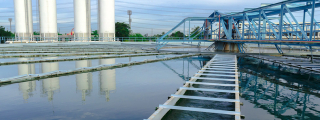
  • Watching Over the Water System

  • Winter Rain in Southwest U.S. Determined by New Zealand Summers

    The interhemispheric teleconnection that we have discovered promises earlier and more accurate prediction of winter precipitation in California and the southwestern U.S.,” said study co-author Professor Efi Foufoula-Georgiou. “Knowing how much rain to expect in the coming winter is crucial for the economy, water security and ecosystem management of the region.

  • Wildfire Predictions from a Water Tank

    “This is an important contribution to the wildland fire literature,” says Tirtha Banerjee, an expert in turbulent flows in natural environments [and associate professor] at the University of California, Irvine. The research “provides insights into the complex interaction of strong buoyant plumes with canopy turbulence,” he says. Banerjee adds that this information is essential for predictions of the spread of fires through the dispersal of burning pieces of wood. Read More

  • Wildfire burn areas in California are growing ever larger due to greenhouse gas emissions

    Study authors determined that California wildfires consumed five times more area between 1996 and 2021 than in the 25 years prior — an increase chiefly attributed to climate change. Researchers also determined that the 50-year period as a whole saw a 172% increase in burn area. “This is very, very high,” said study co-author Amir AghaKouchak, a professor of civil and environmental engineering at UC Irvine.

  • Water Environment Federation Grants Scholarship to Doctoral Student Sun

  • Winter Design Review

  • We Can Work It Out: Avoiding Disasters

    Amir AghaKouchak, [associate professor] University of California, Irvine; and Ben van der Pluijm, write, “The key question is, What does it take to prevent natural hazards from becoming human disasters? … This leads to another important question: How can the scientific community inform societies about critical thresholds and strengthen their resilience against natural hazards?”

  • What is MSE?

    What is materials science engineering (MSE)?

    An interdisciplinary field that deals with the discovery and design of new materials - materials created to solve major problems in the world related to energy, human health and the environment.

  • Walking with the Dean

  • Welcome Festivities Kick Off New School Year

Pages