
BME Distinguished Speaker Series: Molecular Computational Anatomy - from Euler to Dirac
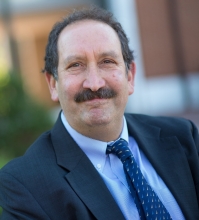
Abstract: I will discuss progress over the years in computational anatomy (CA), representing human shape and form as an orbit under the group of diffeomorphisms. Applications to studying the spatio-temporal organization of the progression of Alzheimer's disease will be presented. Recent progress in extending CA from the tissue scales to the molecular scales for digital pathology and spatial transcriptomics will be described.
Bio: Michael I. Miller is the Bessie Darling Massey Professor and Director of Biomedical Engineering at Johns Hopkins University. He is also co-director of the Kavli Neuroscience Discovery Institute. As a biomedical engineer who specializes in data science, Miller is pioneering cutting-edge technologies in computational medicine to understand and diagnose neurodegenerative diseases. His research focuses on the functional and structural characteristics of the human brain in health and disease, including Huntington’s disease, Alzheimer’s disease, dementia, bipolar disorder, schizophrenia and epilepsy. By developing new tools to analyze patient brain scans, derived from advanced medical imaging technologies, Miller aims to predict the risk of developing neurological disorders years before the onset of clinical symptoms. His lab is currently devising cloud-based methods to build and share libraries of brain images -- and the algorithms used to understand them -- associated with neuropsychiatric illness. Miller’s research is highly translational, and he has co-founded four startup companies in the past decade. Miller has co-authored more than 200 peer-reviewed publications as well as two highly cited textbooks on random point processes and computational anatomy. He has received numerous awards for his work, including the Institute of Electrical and Electronics Engineers Biomedical Engineering Thesis Award, the Johns Hopkins Paul Ehrlich Graduate Student Thesis Award and the National Science Foundation Presidential Young Investigator Award. He was named an inaugural Johns Hopkins University Gilman Scholar in 2011 for demonstrating a distinguished record of research, teaching and service. He is an elected fellow of the American Institute for Medical and Biological Engineering and the Biomedical Engineering Society.
Share

Upcoming Events
-
CBE 298 Seminar: Coffee as a Platform for Experiential Chemical Engineering Education: From Qualitative Design to Quantitative Analysis
-
EECS Seminar: Printed Electronic Skin for Robots and Interactive Systems
-
MSE 298 Seminar: Illuminating Microstructure-Dependent Binding and Delivery of Nucleic Acids via Gradient Copolymerization and Field Flow Fractionation
-
MSE 298 Seminar: Illuminating Microstructure-Dependent Binding and Delivery of Nucleic Acids via Gradient Copolymerization and Field Flow Fractionation