
CBE 298 Seminar: Revisiting How Catalysts Work: From Active Sites to Evolution Pathways
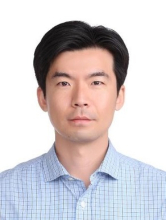
Professor, Department of Chemistry and
Green-Nano Materials Research Center
Kyungpook National University, Korea
Abstract: Catalysis has been understood through the concept of active sites, where catalytic performance is primarily determined by the geometric and electronic structures of specific surface atoms. However, increasing evidence from operando and in-situ studies reveals that catalysts rarely remain static under reaction conditions. Instead, they can undergo phase transformations, defect generation, surface reconstruction, interfacial reorganization, and dynamic interactions with adsorbates. These observations raise a fundamental question: Is catalytic activity solely a property of catalyst structure, or is it also governed by the pathways through which catalysts evolve during operation?
In this talk, we discuss how recent advances in electrocatalysis challenge the traditional view of catalysts and extend our understanding beyond active sites and active phases. Through examples of structural reconstruction, defect evolution, and surface-state transformations under electrochemical conditions, we examine how these changes affect catalytic activity and stability. We propose that catalytic performance is determined not only by the structure of a catalyst, but also by how the catalyst evolves under operating conditions. Understanding these evolution pathways can provide new insights into the design and control of catalysts under working conditions.
Bio: Sang-Il Choi is a Professor of Chemistry at Kyungpook National University (KNU), South Korea. He received his Ph.D. in Inorganic Chemistry from KAIST and conducted postdoctoral research with Prof. Younan Xia at the Georgia Institute of Technology before joining KNU in 2015. His research focuses on the design and synthesis of nanostructured catalysts and electrocatalysts, with particular emphasis on understanding how surface structure, composition, defects, and dynamic structural evolution govern catalytic activity and stability. His work spans electrochemical reactions relevant to hydrogen production, fuel cells, water electrolysis, and sustainable chemical conversion. He has authored more than 120 publications, including papers in Science, PNAS, JACS, Nature Communications, Advanced Materials, ACS Nano, and Nano Letters. His honors include the JACS Young Investigator recognition, POSCO Science Fellowship, Prime Minister’s Citation, and Young Inorganic Chemist Award from the Korean Chemical Society. He is currently a Fulbright Visiting Scholar at the University of California, Irvine.
Share

Related Content
| Attachment | Size |
|---|---|
| 493.92 KB |
Upcoming Events
-
EECS Seminar: Printed Electronic Skin for Robots and Interactive Systems
-
MAE 298 Seminar:Ellipse Synthesis and the Computational Design of Robot Geometries
-
CBE 298 Seminar: Do I Belong Here? Addressing Imposter Syndrome in Graduate School
-
CEE Ph.D. Defense Announcement: Detection and Monitoring of Viruses in Water for Public Health & Environmental Engineering Applications
-
MSE 298 Seminar: Challenges and Opportunities Using AI to Accelerate Materials Discovery and Process Optimization