
MSE 298 Seminar: Ionic Correlations in Polymer Nanostructures - From Block Copolymers to End-Charged Blends
Abstract: Ionic interactions provide a powerful and tunable means to direct polymer phase behavior, with applications in solid-state batteries and polymer compatibilization. This talk explores two key systems — neutral-charged block copolymers and ion-functionalized polymer blends — using an electrostatic fluctuation-augmented self-consistent field theory. For AB block copolymers with partially charged A-blocks, we demonstrate that ion correlations induce a "chimney-like" phase diagram, but dielectric contrast between blocks weakens the "chimney-like" feature. As the A-block charge fraction increases, counterions shift from interfacial accumulation to more uniform distribution within the A-domain. Notably, smaller counterions promote localized ion distributions, leading to hierarchical nanostructures (e.g., alternating layers, concentric cylindrical shells, and spherical shells) in lamellar, cylindrical and spherical phases, respectively. These findings are in general agreement with literature data on neutral–charged diblock copolymers and salt-dope diblock copolymers. In the second part, we examine polymer blends where each chain is end-functionalized with a single oppositely charged group. Strong ion correlations effectively link the polymers, inducing phase behavior resembling that of neutral block copolymers. However, the order-disorder transition occurs at a significantly lower critical χN than in neutral systems. Additionally, ion localization persists even in fully miscible blends, and we discuss the transition from macro- to microphase separation. These findings highlight the critical role of ionic interactions in tailoring polymer self-assembly for advanced materials.
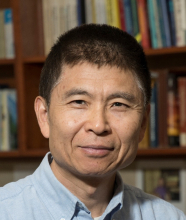
Bio: Zhen-Gang Wang received his B.Sc. in chemistry in 1982 from Beijing (Peking) University, and his Ph.D. in chemistry in 1987 from the University of Chicago. He did postdoctoral research first at Exxon Research and Engineering Company and then at UCLA. Since 1991, he has been on the chemical engineering faculty at the California Institute of Technology, where he is currently the Dick and Barbara Dickinson Professor. He has also served as executive officer (department chair) for chemical engineering for six years.
Wang’s research is the theoretical and computational study of structure, phase behavior, interfacial properties and dynamics of polymers, soft materials and biophysical systems. His current activities revolve around three main themes: charged systems, including polyelectrolytes, salt-doped polymers and electric double layers; nucleation or more generally barrier crossing in polymers and soft matter; and nonlinear rheology of polymer gels and entangled polymers.
Wang is a fellow of the American Physical Society and a member of the U. S. National Academy of Engineering. He is recipient of several significant awards and honors, including the Camille Dreyfus Teacher–Scholar Award (1995), Alfred P. Sloan Award (1996), Braskem Award from the American Institute of Chemical Engineers (AIChE) (2018), AIChE Alpha Chi Sigma Award (2023) and American Physical Society Polymer Physics Prize (2024). In addition, he was awarded the Richard P. Feynman Prize for Excellence in Teaching (2008), Caltech’s highest teaching honor.
Wang has served on the editorial advisory boards of Journal of Theoretical and Computational Chemistry, Macromolecules, ACS Macro Letters, Giant, Acta Physicochimica Sinica, and Science in China B (Chemistry). He is currently an associate editor for the ACS Journal Macromolecules.
Share

Related Content
| Attachment | Size |
|---|---|
| 1.9 MB |
Upcoming Events
-
CBE 298 Seminar: Coffee as a Platform for Experiential Chemical Engineering Education: From Qualitative Design to Quantitative Analysis
-
MSE 298 Seminar: Illuminating Microstructure-Dependent Binding and Delivery of Nucleic Acids via Gradient Copolymerization and Field Flow Fractionation
-
MSE 298 Seminar: Illuminating Microstructure-Dependent Binding and Delivery of Nucleic Acids via Gradient Copolymerization and Field Flow Fractionation