Faculty & Staff Profile
William Tang
Professor Emeritus
BIOMEDICAL ENGINEERING
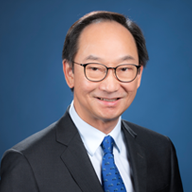
Tang has a joint faculty appointment in the Department of Chemical and Biomolecular Engineering.
Ph.D., University of California at Berkeley, Electrical Engineering and Computer Sciences,
1990
M.S., University of California at Berkeley, Electrical Engineering and Computer Sciences,
1982
B.S., University of California at Berkeley, Electrical Engineering and Computer Sciences,
1980
Dr. Tang’s research focuses on studying biological systems at the micro- and nano-scales
with mechanically-derived modalities. In traditional biomechanics, the human body
is viewed as an intricate collection of interacting mechanical structures and systems
that exhibit both static and dynamic mechanical behaviors. These studies are usually
confined to the level of the entire organisms, physiological subsystems, or individual
organs. The rapid advances in Micro-Electro-Mechanical Systems (MEMS) technologies
offer a set of powerful tools that allows studying biomechanics at the micro scale.
This will shed lights on the finer details of biomechanics, and may uncover fundamental
knowledge of the origin of mechanical behaviors in living organisms.
Dr. Tang is developing devices and platforms that enable both in-vitro and in-vivo
studies of the mechanical aspects in physiological activities involving cells, tissues,
and organs. They would be suitable for interfacing and interrogating the mechanical
phenomena of interest within the targeted physiological activities at the length-scales
that are beyond the reach of traditional biomedical instrumentations. His vision is
that these devices and platforms will enable new research efforts to understand the
significance of biomechanics at the most basic unit of life -- the cell. He also aims
at enabling clinically-relevant applications that require accurate real-time data
on the stress-strain distributions in the organs or physiological systems for investigation
and diagnosis of the mechanical implications of health and diseases within the organs.
One of the ultimate goals is to leverage the understanding in physiological phenomena
researched with these tools to develop prosthetic devices to restore both sensory
and motor functions that are mechanical in nature within the body.
Research Topics: Microscale and nanoscale engineering for information technology and biomedical sciences.