Faculty & Staff Profile
Brett Sanders
Chancellor's Professor
CIVIL & ENVIRONMENTAL ENGINEERING
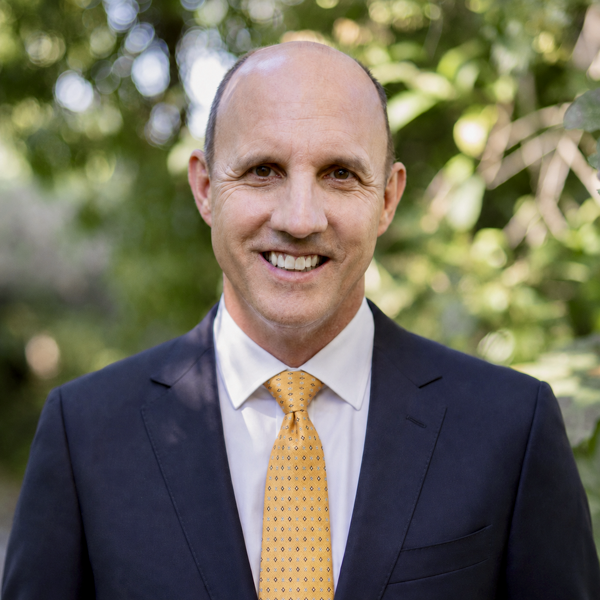
Brett Sanders is a Chancellor’s Professor of Civil and Environmental Engineering.
He
earned a B.S. in Civil Engineering from the University of California, Berkeley and
an
M.S. and PhD in Civil Engineering at the University of Michigan emphasizing
environmental fluid mechanics and computational methods. He currently serves as
Director of the UC Irvine Climate Collaboration, an initiative that brings together
expertise from many disciplines and community partners to address urgent climate,
resilience and sustainability challenges in Orange County, California and beyond.
Dr. Sanders’ research seeks to promote improved understanding of and responses to
flooding and erosion risks. His work addresses coastal, riverine, urban and mountain
risks. He is the developer of the ParBreZo and PRIMo flood simulation models for
compound risk assessment at local to regional scales, and his work has informed the
practice of collaborative flood modeling for effective and equitable flood adaptation.
Dr. Sanders focuses research on compound and interconnected climate risks, and he
presently leads collaborative flood modeling projects in California and Florida.
Dr. Sanders is a Fellow in the Engineering Mechanics Institute of ASCE, a Fellow of
the Environmental and Water Resources Institute of ASCE, a Fellow of the
International Association for Hydro-Environment Research, a Fellow of the Faculty
Academy for Teaching Excellence, a Science Advisory Panelist for the California
Coastal Commission, the Chair of the Orange County Climate Resiliency Task Force,
and the recipient of numerous teaching awards at UCI. He was recognized as one of
the Most Influential People in Orange County by the OC Register.
Ph.D. Civil Engineering, 1997, University of Michigan
M.S. Civil Engineering, 1994, University of Michigan
B.S. Civil Engineering, 1993, University of California, Berkeley
Sanders’ research group specializes in the development of innovative algorithms for flow and transport in river and coastal systems and the integration of information technologies to create more accurate and efficient simulation tools. Flooding and erosion hazards are the primary focus of current research, particularly coastal flooding and urban flooding. Other interests include surface water quality, low impact development impacts on hydrology, dam-break flooding, aerial and terrestrial lidar scanning, geographical information systems, high performance computing, simulation tools for decision-making.