Department of Civil and Environmental Engineering
Henry Samueli Endowed Fellowship
One of the premier awards offered to incoming or continuing graduate students in the school. This award is funded by Henry Samueli, co-founder of Broadcom Corporation, after whom the school is named. The award is open to Ph.D. students showing exceptional promise of technical and scholarly work in civil and environmental engineering. The number of awards and amounts varies each year.
Eligibility Criteria:
- Be a continuing Ph.D. student in the Civil and Environmental Engineering program.
- Be enrolled full time in the quarters the fellowship is to be disbursed.
A call for applications will be sent by the Graduate Coordinator to continuing Ph.D. students during the year the fellowship funding is available.
2024/25 Awardees
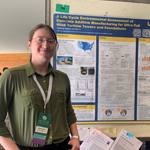
Kathryn Jones
Faculty Advisor: Mo Li
Research Title: Sustainable Additively Manufactured Concrete for Wind Energy Infrastructure based
on a Life Cycle Framework
Research Interests: In my research, I'm focused on investigating and developing sustainable 3D printed
concrete materials based on a life cycle approach. The goal of my research is both
to understand the life cycle environmental impact of large-scale 3D printed concrete
structures, and to mitigate the greenhouse gas emissions of 3D printed cementitious
materials while maintaining their mechanical performance. Right now, I'm working on
developing novel methodologies to incorporate recycled concrete as a substitute for
cement and sand in printed concretes. Understanding how the material properties of
the recycled components relate to the printability of a finished concrete can help
us predict the maximum amount of locally available recycled material that can be used
in a unique 3D printed concrete, without negatively impacting its performance. This
in turn will help to enable more sustainable and automated construction solutions.
Donghui Ma
Faculty Advisor: Christopher Olivares Martinez
Research Title: Microbial Enzymatic Transformation and Community Response to PFAS and AFFF in the
Environment
Research Interests: My research focuses on the interactions between per- and polyfluoroalkyl substances
(PFAS) and environmental microbial communities. Specifically, I am identifying key
microbial enzymes involved in PFAS transformation. Using a cell-free enzymatic system,
I have tested over a dozen PFAS precursors to screen for microbial enzymes capable
of transforming specific PFAS compounds. I aim to characterize their transformation
pathways and reaction kinetics. In another ongoing project, I am investigating how
microbial communities respond to the environmental release of aqueous film-forming
foams (AFFF). My research seeks to answer the following questions: How does the PFAS
composition in AFFF evolve over time? As PFAS compounds are transformed, how do microbial
community structures shift? And how are microbial metabolic pathways perturbed throughout
this process?
Yifu Gao
Faculty Advisor: Jasper Vrugt
Research Title: Soil Moisture–Precipitation Coupling under A Changing Climate
Research Interests: My research investigates how soil moisture drives precipitation variability in transitional
climate zones (e.g., the Great Plains). This soil moisture–precipitation coupling
(SMPC) modulates near-surface climate through shaping energy partitioning, boundary
layer dynamics, and mesoscale circulation, influencing extremes like floods and droughts.
By integrating observational and model data, I identify and quantify linear and nonlinear
land-atmosphere interactions that trigger and control precipitation. Using advanced
global sensitivity analysis approaches, I introduce generalized coupling strength
to re-delineate SMPC hotspots across the contiguous United States, yielding characteristic
response functions that describe direct and indirect SMPC pathways.
Jialin Dong
Faculty Advisor: Christopher Olivares Martinez
Research Title: Predictive Machine Learning Modeling of PFAS Fate and Transport
Research Interests: Jialin’s research centers on the environmental fate and transport of "forever pollutants",
per- and polyfluoroalkyl substances (PFAS), integrating environmental analysis with
data mining and machine learning techniques. Her work focuses on developing predictive
models to assess PFAS contamination in groundwater and wastewater treatment plants,
supporting regulatory monitoring and public health protection. She has built a statewide
PFAS database and implemented high-accuracy machine learning models to identify contamination
patterns and key risk factors. Her ongoing research expands this framework to a national
scale, integrating diverse datasets to improve PFAS risk assessment and guide evidence-based
environmental policy
2022/23 Awardees

Ziwei Han
Faculty Advisor: Adeyemi Adeleye
Research Title: Immobilization of heavy metals in environmental matrices using iron-based engineered
nanoparticles
Research Interests: The central theme of my doctoral research is using engineered nanoparticles to improve
the quality of the environment. I synthesize pristine and modified nanosized iron
(Fe0) particles and use them to immobilize toxic heavy metal(loid)s in environmental
matrices such as water and soil. To gain fundamental knowledge, I employ a wide range
of spectroscopic, spectrometric, and microscopic tools to understand the chemistry
of interactions among the nanoparticles, target heavy metals, and other important
biotic and abiotic factors that are present in the environment. I also use machine
learning to enhance understanding on how input parameters influence remediation outcomes,
and to optimize the treatment system. In an ongoing study, I am evaluating the potential
for using iron nanoparticles as agricultural soil amendments to decrease uptake of
heavy metals by plants from soil during cultivation.
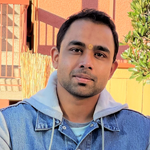
Ajinkya Desai
Faculty Advisor: Tirtha Banerjee
Research Title: Turbulent Fluid Dynamics of Wildland Fires
Research Interests: "My research investigates the interaction between wildland fires and the surrounding
atmosphere from a wind-turbulence standpoint on both laboratory (small) and operational
(large) scales. Fire behavior in grassland and forested environments is linked with
the ambient atmospheric (or canopy) turbulence through a feedback mechanism: one informs
the other and vice versa. Such behavior also influences the dispersion of smoke, impacting
human health and visibility for civilians residing on the boundaries of wilderness.
The goal of my research is to describe, both qualitatively and quantitatively, the
organized swirling motions that characterize the complex turbulent environment of
a wildland fire. My approach includes the analysis of experimental burn data, the
analytical exploration of mathematical fire-spread models, and computer simulations
on fire spread in different environments."
2020/21 Awardees
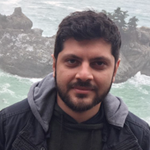
Siavash Zare
Faculty Advisor: MJ Qomi
Research Title: Carbon sequestration in divalent metal silicates
Research Interests: "In order to stabilize the global mean temperature, the total emission of carbon dioxide
must approach zero by 2050. It means that the existing and future energy infrastructure
must be modified with carbon capture and storage technologies. My research mainly
focuses on the natural and synthetic rocks that are capable to permanently store CO2 through
complex chemical reactions. The main objective of my research is to identify and optimize
the most accessible chemical pathways to store the maximum amount of CO2 using atomistic
simulations."
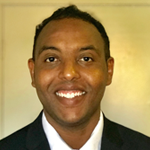
Mohammed Ombadi
Faculty Advisor: Soroosh Sorooshian
Research Title: Applications of Causal Inference, Graph theory and Data Mining in Hydro-meteorological
Systems
Research Interests: "Hydrometeorological systems are characterized by complex interactions that manifest
only at specific, discrete and dominant spatiotemporal scales. The traditional approach
in contemporary hydrology is reductionist in its essence and seeks to obtain predictive
understanding of hydrologic processes at the macroscale based on models that aggregate
theoretical and empirical knowledge at smaller scales. However, in my research, I
use state-of-the-art methods of causal inference and data mining to offer an alternative
and complementary paradigm to the contemporary reductionist approach. Generally speaking,
methods of causal inference are rooted in networks, information and chaos theories,
and they are utilized in tandem with observational datasets to detect regularities
and patterns at macroscales. Specifically, I apply these methods to improve our understanding
of the dynamic similarity of hydrologic basins and the differential impact of environmental
variables in regulating evapotranspiration in addition to developing effective data-driven
streamflow forecasting schemes."
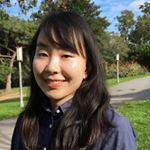
Youngeun Bae
Faculty Advisor: Stephen Ritchie
Research Title: Adoption and Demand Models of Alternative Fuels in Heavy-duty Vehicle Fleets in California
Research Interests: "My research project aims to investigate adoption behavior and develop a demand model
of alternative fuels in heavy-duty vehicle (HDV) fleets in California. The specific
goal of my study is twofold. First, it attempts to build a theory regarding alternative
fuels adoption and nonadoption behavior revealed by HDV fleet operators in California.
Second, this study seeks to explore the demand of alternative fuels in the California
HDV sector in the near future considering the state’s emission reduction goals. By
contributing to the development of more effective policy and technological strategies
to facilitate wider adoption of heavy-duty alternative fueled vehicles, this study
intends to help improve local air quality and mitigate global challenges of climate
change."
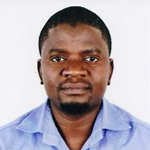
Omobayo Salawu
Faculty Advisor: Adeyemi Adeleye
Research Title: Advanced materials for the removal of emerging contaminants from water
Research Interests: "I am interested in the use of cheap, effective and sustainable materials for environmental
remediation. My research is focused on developing new porous carbon materials for
the removal of emerging contaminants such as pharmaceuticals, per- and polyfluoroalkyl
substances from water. I apply both experimental and computational methods to determine
the most appropriate material modification and surface functionalization to increase
the affinity and specificity of new adsorbents for target contaminants. The goal of
my research is to contribute to the availability of potable water."
2019/20 Awardees
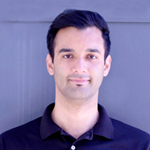 Jawad Fayaz is working under Farzin Zareian on challenging topics of Performance-Based Structural
and Earthquake Engineering, Ground Motion Analysis and Seismic Design of Bridge and
Building structures. His research studies broadly have two-fold goals that include:
i) improving the design and analysis methodologies of Bridge and Building structures,
and ii) prediction of the characteristics of seismic ground motions. His research
work mainly involves Reliability Analysis and Time-Series Analysis using Statistical
Methods and Machine Learning and Deep Learning techniques. He is determined to implement
the earned skills and knowledge for rapid mitigation of hazards posed by earthquakes.
PI: Farzin Zareian
Jawad Fayaz is working under Farzin Zareian on challenging topics of Performance-Based Structural
and Earthquake Engineering, Ground Motion Analysis and Seismic Design of Bridge and
Building structures. His research studies broadly have two-fold goals that include:
i) improving the design and analysis methodologies of Bridge and Building structures,
and ii) prediction of the characteristics of seismic ground motions. His research
work mainly involves Reliability Analysis and Time-Series Analysis using Statistical
Methods and Machine Learning and Deep Learning techniques. He is determined to implement
the earned skills and knowledge for rapid mitigation of hazards posed by earthquakes.
PI: Farzin Zareian
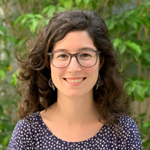 Irene Martinez Josemaria’s research interests are focused on modeling and mitigation of traffic congestion
in the era of autonomous, connected, and shared mobility. Traffic congestion is a
major issue at individual bottlenecks and at the network level in many metropolitan
areas. Research topics related to individual bottleneck include modeling of the impacts
of variable speed limits and connected and autonomous vehicles on capacity drop and
development of control strategies to prevent, delay, and eliminate the capacity drop
phenomenon. Topics related to network level congestion include empirical analysis
of trip length distribution, development of a probabilistic agent-based model of network
trip flows, optimization of the fleet size of taxis and other mobility service vehicles,
and design of congestion pricing. PI: Wenlong Jin
Irene Martinez Josemaria’s research interests are focused on modeling and mitigation of traffic congestion
in the era of autonomous, connected, and shared mobility. Traffic congestion is a
major issue at individual bottlenecks and at the network level in many metropolitan
areas. Research topics related to individual bottleneck include modeling of the impacts
of variable speed limits and connected and autonomous vehicles on capacity drop and
development of control strategies to prevent, delay, and eliminate the capacity drop
phenomenon. Topics related to network level congestion include empirical analysis
of trip length distribution, development of a probabilistic agent-based model of network
trip flows, optimization of the fleet size of taxis and other mobility service vehicles,
and design of congestion pricing. PI: Wenlong Jin
2018/19 Awardees
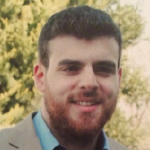 Antonios Mamalakis is working with Distinguished Professor Efi Foufoula-Georgiou on enhancing physical
understanding of large-scale climate variability and teleconnections, and of their
regional hydroclimatic impacts. In his research, he also utilizes Bayesian statistics
and machine learning techniques to improve regional precipitation and temperature
forecast skill at seasonal to inter-annual scales in a changing climate. PI: Efi Foufoula-Georgiou
Antonios Mamalakis is working with Distinguished Professor Efi Foufoula-Georgiou on enhancing physical
understanding of large-scale climate variability and teleconnections, and of their
regional hydroclimatic impacts. In his research, he also utilizes Bayesian statistics
and machine learning techniques to improve regional precipitation and temperature
forecast skill at seasonal to inter-annual scales in a changing climate. PI: Efi Foufoula-Georgiou
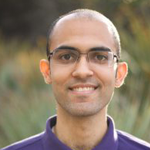 Ali Morshedifard: Concrete is one of the main materials utilized in civil engineering construction
in the modern age (annual production of roughly 20 billion tons). Moreover, its time-dependent
behavior has a significant impact on the design of various structures such as dams
and bridges. Since I joined the department of Civil and Environmental Engineering
at UC Irvine, my research has been focused on breaking time and length scale barriers
in modeling of cementitious materials with the ultimate goal of a deep understanding
of the aging mechanisms involved. We hope that our findings can pave the way to a
more environmentally friendly concrete which is a critical challenge of our time.
PI: Mohammad Javad Abdolhosseini Qomi
Ali Morshedifard: Concrete is one of the main materials utilized in civil engineering construction
in the modern age (annual production of roughly 20 billion tons). Moreover, its time-dependent
behavior has a significant impact on the design of various structures such as dams
and bridges. Since I joined the department of Civil and Environmental Engineering
at UC Irvine, my research has been focused on breaking time and length scale barriers
in modeling of cementitious materials with the ultimate goal of a deep understanding
of the aging mechanisms involved. We hope that our findings can pave the way to a
more environmentally friendly concrete which is a critical challenge of our time.
PI: Mohammad Javad Abdolhosseini Qomi
2017/18 Awardees
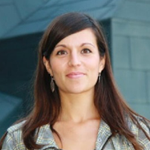 Susana Anacleto-Lupianez is working with Prof. Anne Lemnitzer to investigate the seismic performance of reinforced
concrete moment-resisting frame beams with large rectangular web openings. Her main
focus is to develop experimentally validated simulation models that are able to predict
the highly nonlinear response of this special members when tested under cyclic load
reversals up to complete structural failure. PI: Anne Lemnitzer
Susana Anacleto-Lupianez is working with Prof. Anne Lemnitzer to investigate the seismic performance of reinforced
concrete moment-resisting frame beams with large rectangular web openings. Her main
focus is to develop experimentally validated simulation models that are able to predict
the highly nonlinear response of this special members when tested under cyclic load
reversals up to complete structural failure. PI: Anne Lemnitzer
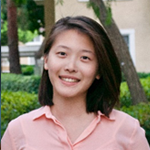 Felicia Chiang’s research goals are focused on understanding the effects of anthropogenic climate
change on hydrologic and climate variables. Her primary research interests are quantifying
concurrent changes in hydrologic and temperature conditions and deconstructing these
changes through the use of climate model simulations. PI: Amir AghaKouchak
Felicia Chiang’s research goals are focused on understanding the effects of anthropogenic climate
change on hydrologic and climate variables. Her primary research interests are quantifying
concurrent changes in hydrologic and temperature conditions and deconstructing these
changes through the use of climate model simulations. PI: Amir AghaKouchak
 Emily Parker's research is focused on green infrastructure for urban runoff management and stormwater
harvesting in southern California. She is currently working to understand and model
how biofilter design influences stormwater contaminant removal. PI: Stanley Grant
Emily Parker's research is focused on green infrastructure for urban runoff management and stormwater
harvesting in southern California. She is currently working to understand and model
how biofilter design influences stormwater contaminant removal. PI: Stanley Grant

Emma Reid: The impacts of rising sea surface temperatures may lead to the collapse of global reef ecosystems, however, the effects of climate change on corals are not uniform. Although it is not fully understood what makes certain reefs more resilient to coral bleaching than others, emerging evidence suggests that reefs living in areas with naturally variable thermal environments may have higher temperature tolerance, even across an individual reef. The goal of my research is to quantify environmental gradients using high resolution spatiotemporal measurements, and determine the processes that drive variability on coral reefs. PI: Kristen Davis
2016/17 Awardees
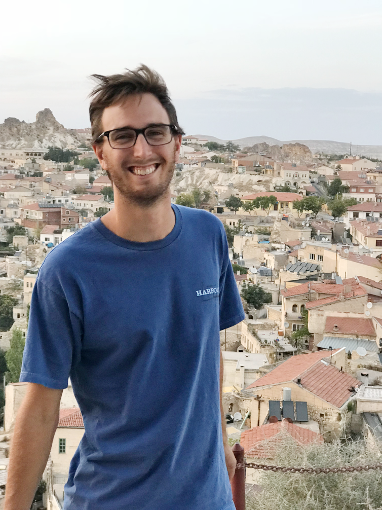
Matthew Brand: Codevelopment of modeling tools to manage sediment for sustainable and resilient coastal lowland habitat in Southern California. PI: Brett Sanders
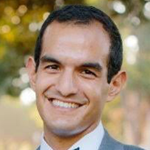
Trevor Jones: Mineral precipitation in fractures: The role of local heterogeneity on fracture-scale reactive transport processes. PI: Russ Detwiler
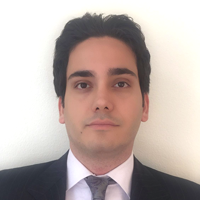
Lohrasb Keykhosropour is working with Professor Lemnitzer on investigation of kinematic soil-structure interaction (SSI) and distribution of lateral seismic soil pressures for flexible deep underground structures in urban settings through experimental and numerical simulations. PI: Anne Lemnitzer
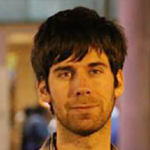
Alexandre Martinez: Alex works on Water-Energy-Food Nexus in California. The overarching goal of his work is to understand how climate extremes (e.g., droughts) affect the interactions between water, food and energy sectors. PI: Amir Aghakouchak
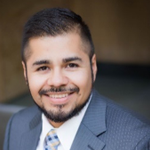
Ricardo Medina: Experimental investigation of multi-component proppant suspensions flowing and settling inside transparent fractures. PI: Russ Detwiler